Snigdha Tiwari
Why Bhutan Feels Better Than India (A Raw Travel Experience from the Border to Punakha)
Introduction: One Gate, Two Worlds
I didn’t expect to feel this shaken by a border.
Crossing from Jaigaon into Phuentsholing through the Bhutan Gate felt like stepping into a completely different reality. On one side – noise, chaos, honking, crowds. On the other – silence, order, calm.
Same geography. Same people. Just one wall and a gate between them.
This blog isn’t about saying one country is “better” in a competitive way. It’s about **why Bhutan *feels* better to many travelers**, especially if you’re coming from the US or UK looking for something deeper than just sightseeing.
View this post on Instagram
1. Peace vs Chaos: The First Impression That Stays
The moment you cross into Bhutan, something shifts internally.
In India, especially at busy border towns, the energy can feel overwhelming – constant movement, sounds, and unpredictability. But Bhutan immediately slows you down.
* No loud honking
* Cleaner streets
* Organized traffic
* People walking without rush
It’s not that India lacks beauty – it absolutely doesn’t. But Bhutan feels **intentionally calm**, almost like the country is designed to protect your mental space.
For many Western travelers, this is a huge factor. You don’t feel overstimulated – you feel grounded.
2. Cleanliness & Order: A Cultural Priority
Bhutan takes cleanliness seriously – not as a trend, but as a way of life.
From Phuentsholing to the valleys of Punakha, you’ll notice:
* Minimal litter
* Well-maintained roads
* Structured urban planning
* Traditional architecture is preserved beautifully
Compare that to many Indian cities where infrastructure struggles to keep up with population density, and the difference becomes obvious.
Bhutan’s focus on **Gross National Happiness** (instead of GDP obsession) reflects directly in how the country looks and feels.
3. Simplicity Over Excess: Why Bhutan Feels More “Real”
Traveling through Punakha, I realized something important – Bhutan doesn’t try to impress you.
It just exists.
No aggressive tourism.
No over-commercialization.
No constant selling.
Instead, you experience:
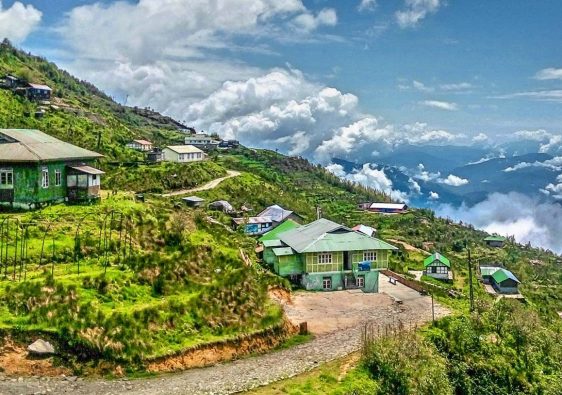
* Quiet villages
* People living simply
* Nature untouched
For travelers from the US or UK, where life is often fast-paced and consumption-driven, Bhutan feels like a reset button.
4. The Human Connection: Unexpected Kindness
One of the most unforgettable parts of my journey wasn’t a place—it was people.
I had planned to camp in Punakha with a friend. But a local family saw us and simply said, *“Why stay outside? Come home.”*
They:
* Gave us a place to sleep
* Cooked warm, homemade food
* Treated us like family
And yes – **Churpi chutney became my absolute favorite** (you’ll understand when you try it).
This kind of hospitality exists in India too, especially in rural areas. But in Bhutan, it feels more consistent, more natural—less transactional.
5. Cost & Travel Rules: What You Need to Know
Here’s something important for travelers:
If You’re Indian:
* You can enter Bhutan freely for up to 24 hours
* You can explore within ~10 km (around Phuentsholing)
* For deeper travel (like Punakha), you need:
* A permit
* A guide
* A Sustainable Development Fee (~₹1200/day)
If You’re from the US/UK/Other Country:
* You’ll need to book through a licensed tour operator
* Pay a daily fee (higher than that of Indian travelers)
* But this includes accommodation, transport, and a guide
This controlled tourism is **why Bhutan stays clean and uncrowded**.
6. Fuel, Costs & Daily Life
Interestingly, some basic things like fuel can be more affordable compared to India in certain regions, which surprised me.
But overall, Bhutan isn’t a “cheap destination” for international travelers.
And that’s intentional.
Bhutan focuses on **high-value, low-impact tourism**- which means fewer crowds, better experiences, and preserved culture.
7. Spiritual Depth: More Than Just Views
I visited Omkareshwar Dham, and the experience was something I didn’t expect.
It wasn’t crowded.
It wasn’t loud.
It wasn’t rushed.
It felt… personal.
Bhutan’s spirituality isn’t performative – it’s integrated into daily life. You’ll see prayer flags, monasteries, and rituals, but they don’t feel like tourist attractions.
They feel alive.
8. So… Is Bhutan Really Better Than India?
Here’s the honest answer:
**Bhutan feels better—but India is deeper.**
India:
* Chaotic, diverse, intense
* Endless variety
* Raw, unpredictable
Bhutan:
* Calm, controlled, intentional
* Clean, peaceful, balanced
* Emotionally soothing
It depends on what you need.
If you’re overwhelmed → Bhutan heals you
If you’re curious → India challenges you
Final Thoughts: Why Bhutan Stays With You
Bhutan doesn’t try to impress you.
It quietly changes you.
From that single border crossing at Jaigaon to Phuentsholing, to the peaceful valleys of Punakha – the journey isn’t just geographical.
It’s emotional.
And maybe that’s why so many travelers say:
“Bhutan isn’t just better… it feels better.”